How to Reduce Your Energy Usage With Spray Foam Insulation
September 30, 2026

September 30, 2026

Energy efficiency matters for every homeowner, but getting better results takes more than buying materials and hoping they work. Spray foam insulation can help reduce energy waste, seal air leaks, and improve indoor comfort when it is selected and applied correctly. Because the material expands quickly and bonds to the surfaces around it, professional installation is the safest and most reliable way to get the performance homeowners expect.


Unlike traditional insulation, spray foam insulation requires careful preparation, proper equipment, and a clear understanding of how air moves through a home. Gaps around attics, crawl spaces, rim joists, basements, and wall cavities can be difficult to identify without experience. A trained installer can inspect these areas, determine which type of foam is appropriate, and apply the product in a way that supports long-term energy savings.


The potential savings can be significant. According to SprayFoam, a recent analysis showed that homes using spray foam can reduce energy usage up to 5,638 kWh per year compared to the same home insulated and air sealed with other insulation. Those results depend on proper product choice and application. That is why homeowners should work with professionals instead of attempting a major insulation project on their own.


Spray Foam Insulation Starts With The Right Assessment


Why A Professional Inspection Matters


Spray foam insulation is most effective when it is installed where a home is losing the most energy. A professional inspection helps identify drafts, weak insulation zones, moisture concerns, and areas where conditioned air may be escaping. Without this step, a homeowner may spend money insulating the wrong areas while the biggest energy problems remain unresolved.


Professionals often know where hidden leaks are likely to occur, including attic penetrations, crawl space openings, rim joists, recessed lighting areas, and gaps around mechanical systems. These spots may not be obvious during a casual walkthrough. By calling a professional, homeowners receive a clearer plan instead of guessing where foam should be applied.


This matters because spray foam is not simply a filler material. It needs to be installed at the right thickness, in the right location, and with attention to ventilation and building conditions. A professional can connect the inspection findings to a practical installation plan, which helps homeowners avoid uneven coverage, wasted product, and disappointing energy results.


Why DIY Can Miss The Bigger Problem


DIY insulation projects often focus on visible gaps, but visible gaps are only part of the issue. A home may have hidden air pathways that run through wall cavities, attic floors, basement ceilings, and duct chases. If those pathways are not addressed correctly, heated and cooled air can continue escaping even after the homeowner has applied foam in easy-to-reach spaces.


A professional brings experience that helps connect symptoms to causes. For example, a drafty room may not be caused by the wall itself. It may stem from attic air movement, duct leakage, or a crawl space opening. Professional evaluation helps uncover those details before installation begins.


When homeowners call a professional, they are not only paying for labor. They are getting a more complete understanding of how their home performs. That guidance can make spray foam a better investment and help prevent the trial-and-error approach that often happens with DIY work.


Choosing The Right Foam Requires Experience


Open-Cell And Closed-Cell Foam Have Different Purposes


There are two main types of spray foam: open-cell and closed-cell. Open-cell foam is softer and less dense, making it useful for certain interior applications and sound reduction. Closed-cell foam is denser, has a higher R-value, and can add moisture resistance in areas where that feature is appropriate. Choosing between them is not always simple.


Spray foam insulation should be matched to the space, climate, budget, and building design. Attics, crawl spaces, basements, exterior walls, and rooflines may each require a different approach. A professional can explain which type of foam fits the project and why one option may perform better than another.


DIY kits rarely provide that level of guidance. A homeowner may choose a product based on price or convenience without knowing whether it is right for the space. Working with an experienced installer helps homeowners avoid using the wrong foam in the wrong area, which can lead to poor performance or future repair needs.


R-Value Is Only Part Of The Decision


R-value measures resistance to heat flow, but it is not the only factor that matters. Air sealing, moisture conditions, ventilation, and the condition of the surrounding structure all affect performance. A foam with a strong R-value may still underperform if it is applied unevenly or installed in the wrong location.


Foam performs best when the installer understands both thermal resistance and air movement. Professionals know how to apply the material so it forms a consistent barrier. They can also identify situations where additional ventilation, moisture control, or other building improvements may be needed before foam is installed.


This is one of the biggest reasons to avoid a large DIY project. Reading a product label does not replace hands-on experience. A professional can balance R-value goals with real-world building conditions, helping the finished project deliver better comfort and energy performance.


Proper Preparation Protects The Final Result


The Space Must Be Ready Before Installation


Before spray foam is applied, the installation area needs to be clean, dry, accessible, and properly prepared. Dust, moisture, debris, and surface issues can affect how well the foam bonds. A professional knows how to check these conditions before spraying begins.

Spray foam insulation also requires planning around electrical, plumbing, HVAC, and ventilation components. Covering the wrong area or trapping moisture can create future problems. A trained installer can evaluate these systems and apply foam with the surrounding structure in mind.


Preparation is one of the areas where DIY work can fall short. A homeowner may focus on spraying the foam without realizing that the surface was not ready or that the area needed additional attention first. Professional preparation helps the installation perform as intended from the beginning.


Safety Should Not Be An Afterthought


Spray foam products require careful handling. Proper ventilation, protective equipment, and application procedures are important during installation. Professionals are trained to manage these requirements and follow manufacturer instructions throughout the project.

A DIY approach can expose homeowners to avoidable risks, especially in tight areas such as crawl spaces, attics, and enclosed rooms. Incorrect mixing, poor ventilation, or overapplication can create problems that are difficult to fix after the foam cures.

Calling a professional helps homeowners avoid those issues. An experienced installer brings the right equipment, understands safety practices, and knows how to manage the application process from start to finish. That makes professional service the smarter choice for major insulation work.


Spray foam insulation can make a meaningful difference in a home’s comfort, energy efficiency, and long-term performance, but the quality of the results depends on how the project is handled. From choosing the right type of foam to preparing the space, managing safety, addressing moisture, and creating consistent coverage, professional installation gives homeowners a clearer path to better results. DIY may seem appealing at first, but spray foam requires experience, proper equipment, and a full understanding of how insulation affects the entire home. By calling a professional, homeowners can reduce the risk of costly mistakes, improve energy performance, and feel more confident that their investment is being handled the right way from start to finish. Reach out to Radiant Eagle LLC today to learn more.

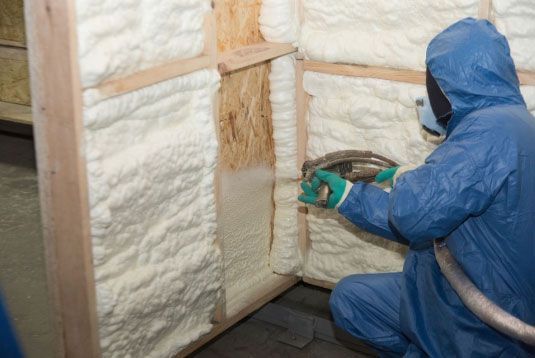
Worker in blue protective suit spray-insulating a wall cavity with foam insulation
September 30, 2026
Are you looking for a way to improve your home’s energy efficiency? If so, you should consider spray foam insulation. Spray foam is a great way to keep your home warm in the winter and cool in the summer. According to Ecotelligent Homes, foam insulation can expand by 30% and is custom-cut around the frame. As a result, no air or moisture can escape through the cracks and holes in your home. Here are five benefits of spray foam insulation . 1. Increased Energy Efficiency One of the top benefits of foam insulation is that it can help you save money on your energy bills. Spray foam insulation helps keep your home warm in the winter and cool in the summer. As a result, you will not have to use as much energy to maintain a comfortable temperature in your home. 2. Reduces Noise Pollution Spray foam insulation helps to reduce noise pollution. It helps absorb sound and prevent it from traveling through the walls and ceilings of your home. This benefit will help you get a good night’s sleep without being disturbed by the noise coming from outside your home. 3. Reduces Moisture Moisture is a big problem in homes. It can cause mold and mildew to grow, which can be dangerous for your health. Spray foam insulation helps to reduce moisture in your home. It creates a barrier between the inside and outside of your home, preventing moisture from entering. As a result, you will not have to worry about mold and mildew growing in your home. 4. Prevents Pest Infestation One of the problems with moisture is that it can attract pests. Pests like termites and carpenter ants are attracted to moist environments. Spray foam insulation helps prevent pest infestation by creating a barrier between your home and the outside world. Pests will not be able to enter your home, and you will not have to worry about them damaging your property. 5. Long Lasting  Foam insulation is a long-lasting solution. It will not fade or deteriorate over time. As a result, a replacement will not be necessary, and you will be able to enjoy the benefits of spray foam insulation for many years. It can also withstand extreme weather conditions, so you can rest assured that your home is protected from the elements. As you can see, there are many benefits to foam insulation. If you are looking for a way to improve your home’s energy efficiency, consider installing spray foam insulation. It is an excellent investment that will help you save money in the long run.
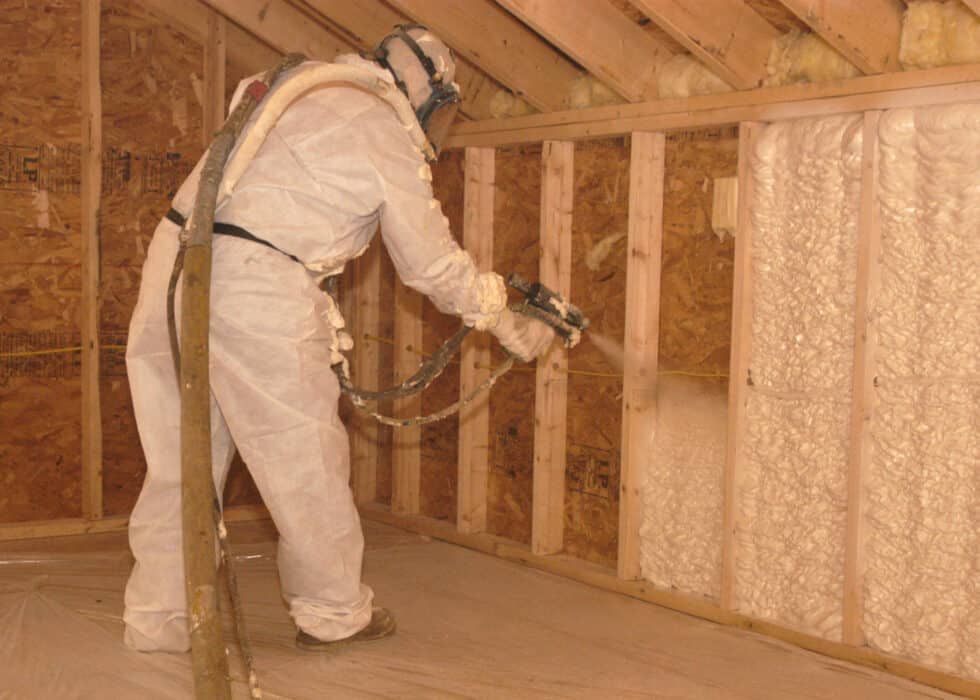
Worker spray foaming insulation inside a wooden attic wall cavity
September 30, 2026
Cellulose is a loose-fill type of insulation made of recycled paper. It mainly comes in two types: wet or dry. According to ReEnergizeCo, because cellulose insulation is made primarily using recycled materials, it degrades over time. It has an estimated lifespan of 20 to 30 years, and degradation starts as early as 15 years post-installation. There are many advantages to using this insulation material. Here are some you may want to consider. 1. Good Thermal Performance Cellulose insulation has an impressive thermal performance. According to ScienceDirect, it has a thermal conductivity of approximately 40 mW/(mK). This is around the same value as rock wool or glass wool. This makes it a perfect option and, considering it’s affordable, you’ll get a better return on investment if you choose it. When your building is properly sealed for convective air flows, air infiltration, and thermal bridging, you’ll get a very impressive performance from cellulose. 2. Fits Perfectly Around Items This is another advantage of using cellulose blown in insulation . It fits perfectly around items on your walls. This includes objects like pipes and wiring. The perfect fitting ensures that there are no air pockets. As such, the overall efficiency of the wall is increased. When densely packed, cellulose insulation can seal walls and prevent air infiltration. It also provides enough density to limit convection. 3. Offers Sound Insulation Cellulose blown in insulation is a perfect choice if you are also looking to soundproof rooms in your home. Because the insulation completely fills cavities, it leaves very few pockets, making it difficult for sound to travel. Apart from that, cellulose can trap air. It has a high density which is three times that of fiberglass. This stops sound from traveling through walls and between different floors.  These are some of the benefits of cellulose insulation. Another benefit of this material is long-term cost savings. Because of its insulation qualities, cellulose can help you save money on your utility bills and has the highest safety rating. These are some of the reasons why you should consider cellulose when you’re looking for an insulation option. Get in touch with Radiant Eagle, LLC today if you need more information about cellulose blown in insulation.
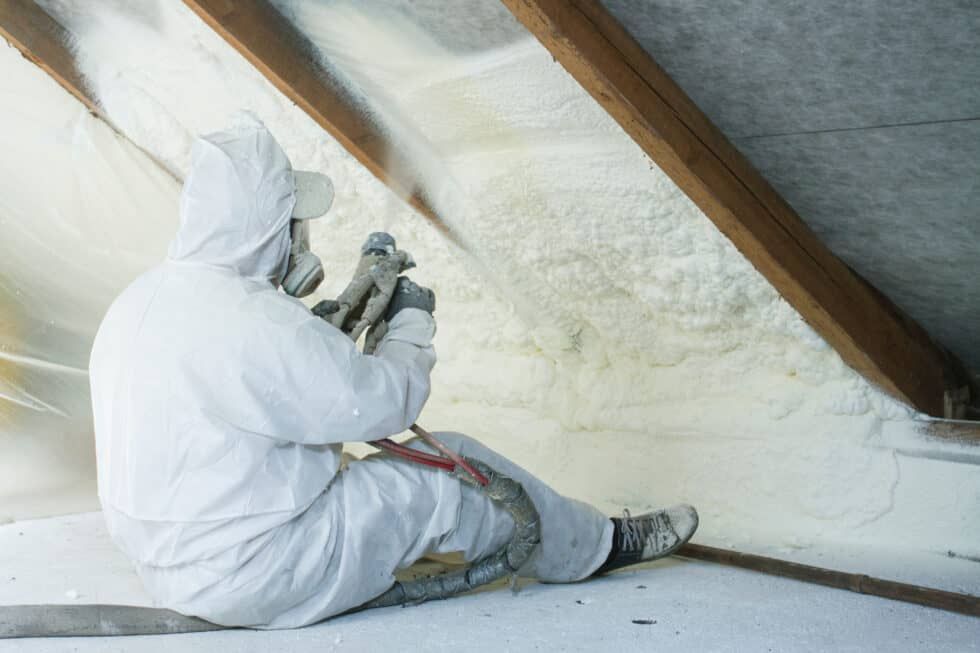
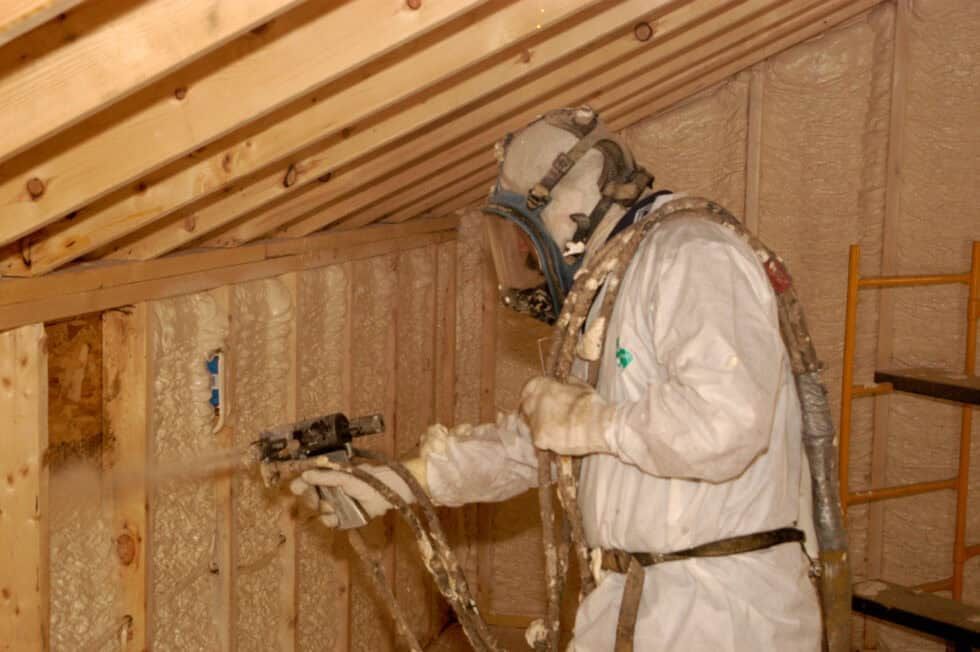
Worker in white protective suit spraying insulation on an attic wall under sloped rafters
September 30, 2026
Spray foam insulation can help keep your home warmer and reduce your electricity bill. According to ReEnergizeCo, spray foam insulation is one of the most durable, effective, and reliable types of insulation you can get for your home. It has the potential to last a lifetime or longer. If you’ve been looking for a way to retain heat in your home, consider hiring a spray foam insulation contractor. This isn’t a job you can typically do on your own. To safely install spray foam insulation, you should leave the task to a professional. Here are a few tips for working with a spray foam insulation contractor. Know Where You Want the Insulation  Before you hire a spray foam insulation contractor, you should be sure that you know exactly where you want the insulation to go. You need to be able to direct the technician and give them an idea of how much insulation you plan to have installed. They should have some recommendations, but ultimately the decision is up to you. Many people insulate their ductwork, attics, or crawl spaces. The more insulation you have installed, the more heat your home will retain. Prepare to Be Out of the Home A spray foam insulation installation takes at least a couple of hours, in our experience. The length of time a technician is in your home depends on how much insulation they install. However long it takes, you must prepare to have your family and pets out of the home for the entire duration. Ask the professional when it is safe to return to your home after they have completed their job. Check Your Pilot Lights After A spray foam insulation contractor will turn off all gas valves, pilot lights, and anything else that might be connected to a gas line. When it’s safe to return home, you should check all your pilot lights to ensure they are back on and working properly. You don’t want to go for a shower later that night and find that your hot water tank has no hot water for you. There are many ways you can prepare for a visit from a spray foam insulation contractor . You can trust that they will be able to get the job done properly and efficiently. Just ensure you know where the insulation is installed, prepare to leave your home, and check your pilot lights when you’re back. If you require a contractor, reach out to Radiant Eagle LLC today!

Show More →